Practical Science for 11-16s
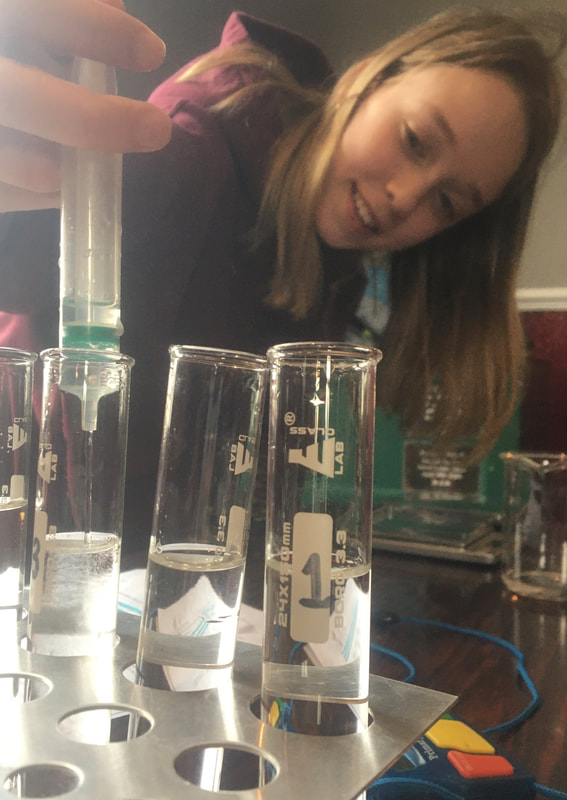
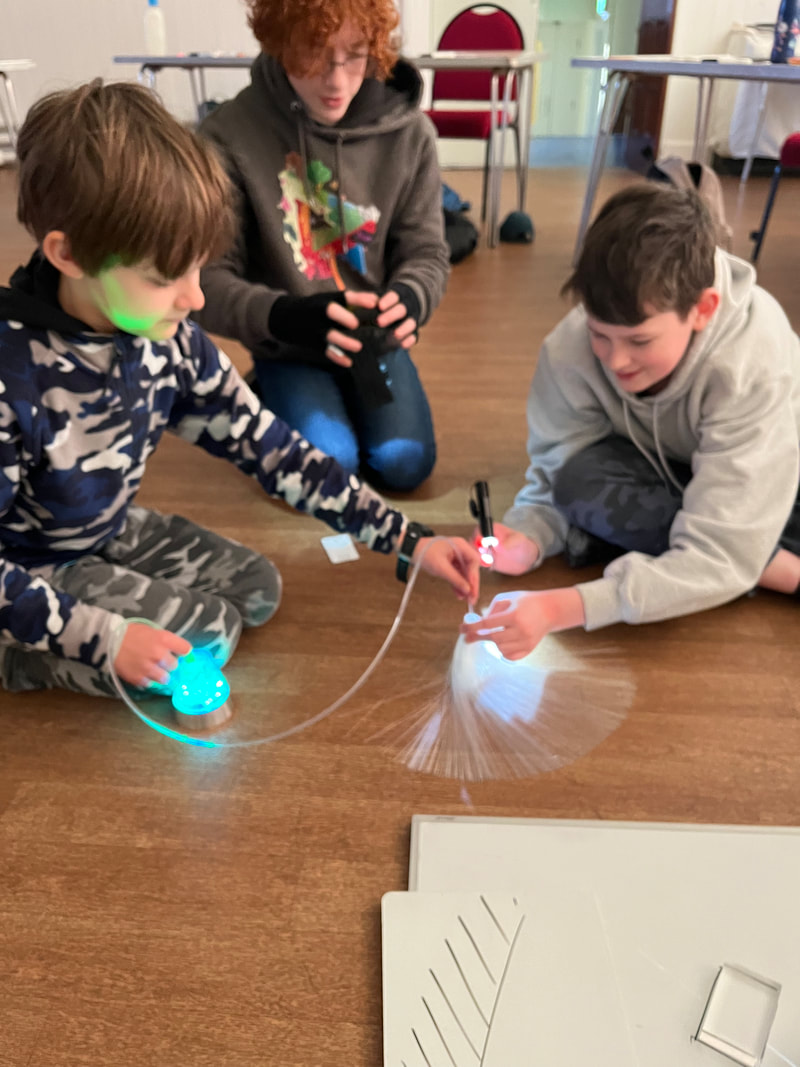
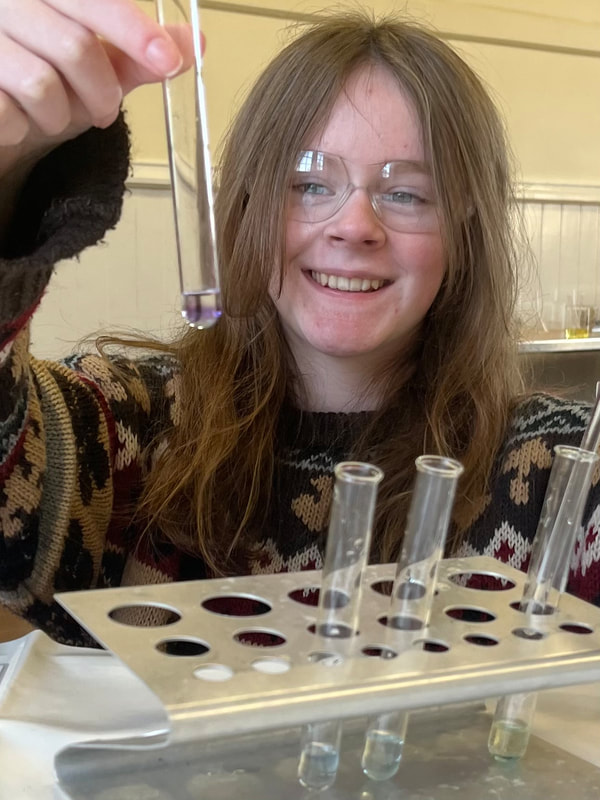
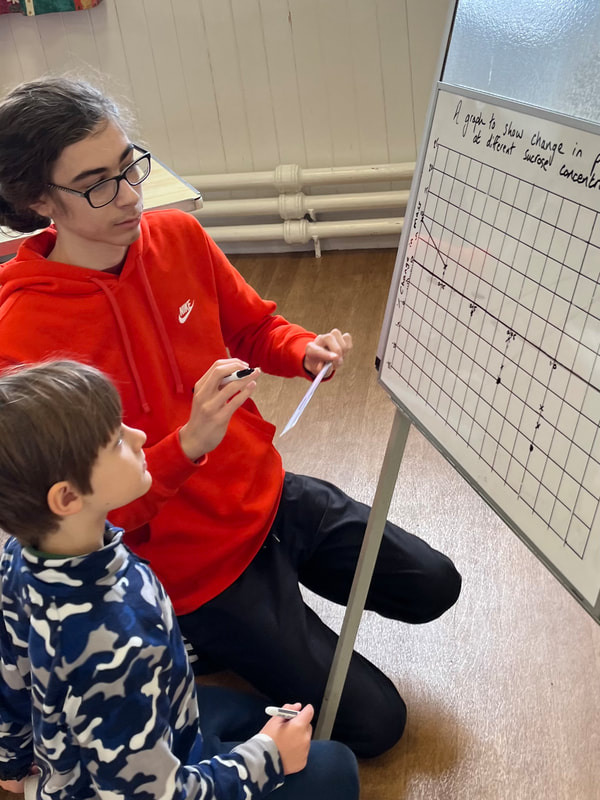
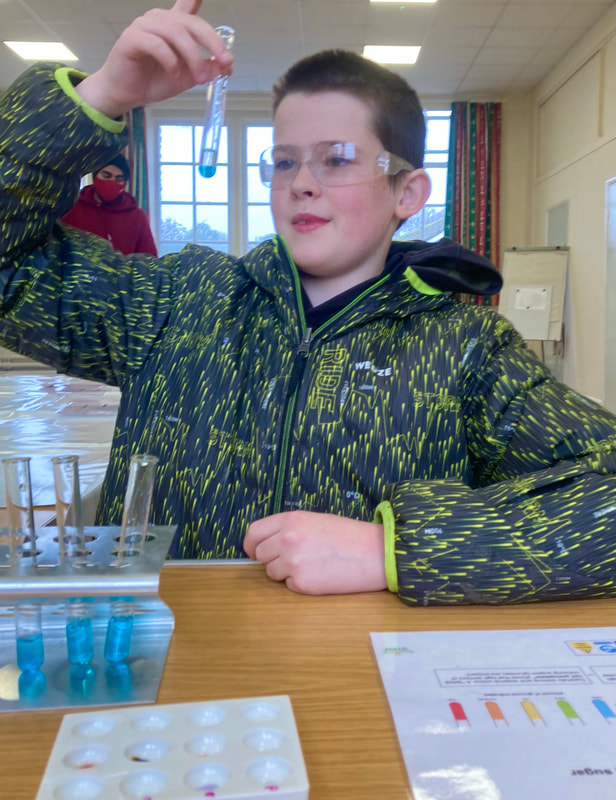
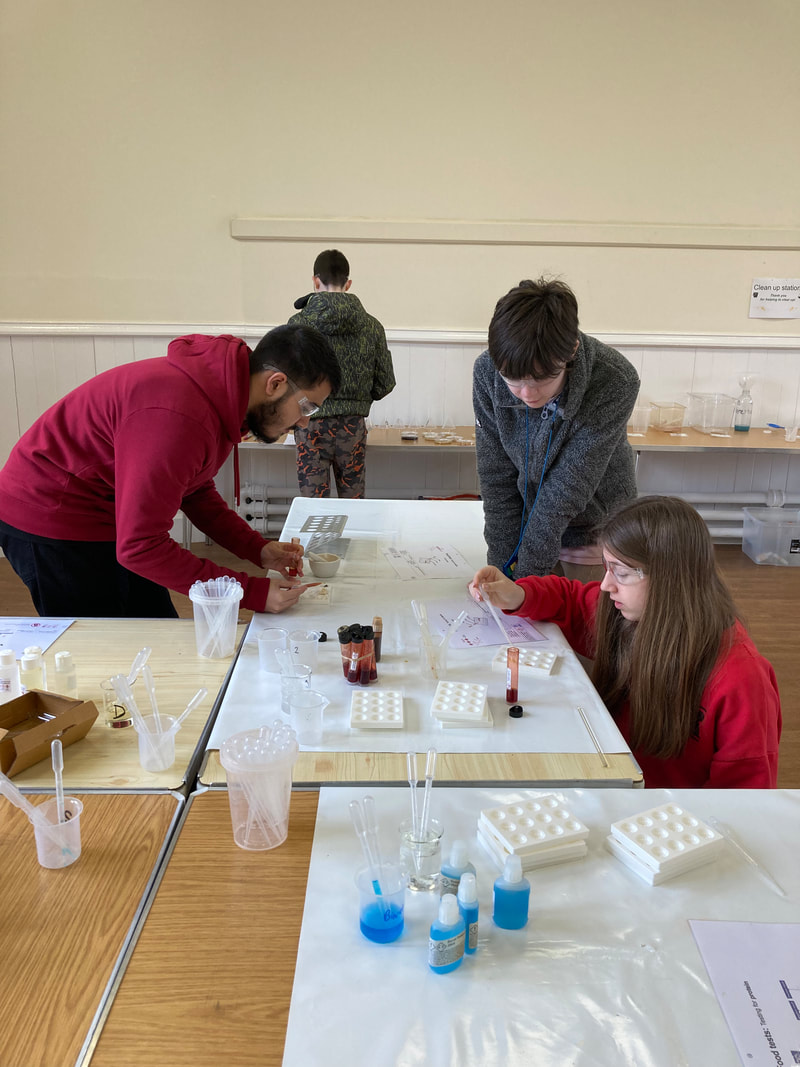
These session offer opportunities to develop experimental understanding, technical skills and scientific knowledge at the same time as offering more exam-focused support for those at any stage of studying towards their IGCSE Science qualifications.
Our approach is to offer opportunities, support, encouragement and knowledge for students to access learning however works best for them. Students who are at any stage of studying towards their IGCSE Science qualifications will benefit from these sessions. Students who are not yet studying for their exams but wish develop their experimental understanding and technical skills before they begin their exam studies, will find these sessions provide a great basis upon which to begin their studies and build on their prior learning. As every child is different, there is no age restriction for attending these sessions. Most tend to be a between eleven years and sixteen years old but the most important considerations are that they are keen to learn and able to apply themselves over the two-hour period in order to get the most out of the experience. If you are unsure about the suitability of these sessions for your child, please do not hesitate to get in touch and Amanda (your tutor) will be happy to talk everything through with you. If you think your child may not be quite ready, you may wish to consider the 8-12s Practical Science sessions.

|
✅ Support your home learning by gaining practical, experimental experience.
✅ Improve the experimental skills that are assessed in written assessments (worth up to 20% of exam marks). ✅ Develop technical skills and understanding of scientific enquiry procedures. ✅ Deepen, revise and apply theoretical knowledge to carry out meaningful practical work. ✅ Active learning and revision of relevant topics ✅ Practice graph skills; making judgements and drawing conclusions; interpreting and evaluating data. ✅ Heavily differentiated to benefit students with varied levels of experience and prior knowledge at any stage of their IGCSE journey. ✅ Suitable for students studying the Edexcel and Cambridge specifications, and for those who have not yet decided. |
|

Booking
2025 Programme:
Booking will open on Monday 19th August 2024
There are ten stand-alone sessions available over a five-week period in Jan / Feb 2025.
10-12am Mondays and Thursdays:
(for full details click on the link or select from the images below)
Simply select from the options below to see details of each session and add those you wish to book to your cart.
Upon booking you will receive a receipt and then a separate booking confirmation email with registration form.
Please check your spam folder and allow 24 hours before contacting us if you do have not received confirmation.
If you would like to hear about booking opportunities by email, please complete this form
Booking will open on Monday 19th August 2024
There are ten stand-alone sessions available over a five-week period in Jan / Feb 2025.
10-12am Mondays and Thursdays:
(for full details click on the link or select from the images below)
- Monday 13th January: Microscopy and cells
- Thursday 16th January: Force and extension
- Monday 20th January: Refraction and the dispersion of light
- Thursday 23rd January: Chemical tests for nutrients
- Monday 27th January: Aerobic respiration
- Thursday 30th January: Heart biology and dissection
- Monday 3rd February: Measuring and calculating density
- Thursday 6th February: Water movement through cells
- Monday 10th February: Lung biology and dissection
- Thursday 13th February: Photosynthesis
Simply select from the options below to see details of each session and add those you wish to book to your cart.
Upon booking you will receive a receipt and then a separate booking confirmation email with registration form.
Please check your spam folder and allow 24 hours before contacting us if you do have not received confirmation.
If you would like to hear about booking opportunities by email, please complete this form
Practical Science for 11-16s: Microscopy and cells
Booking will open on Monday 19th August 2024 (marked as "sold out" until then)
Date and time:
Monday 13th January 2025
10-12am
Location: Wesley Hall, Crookes, Sheffield.
Details
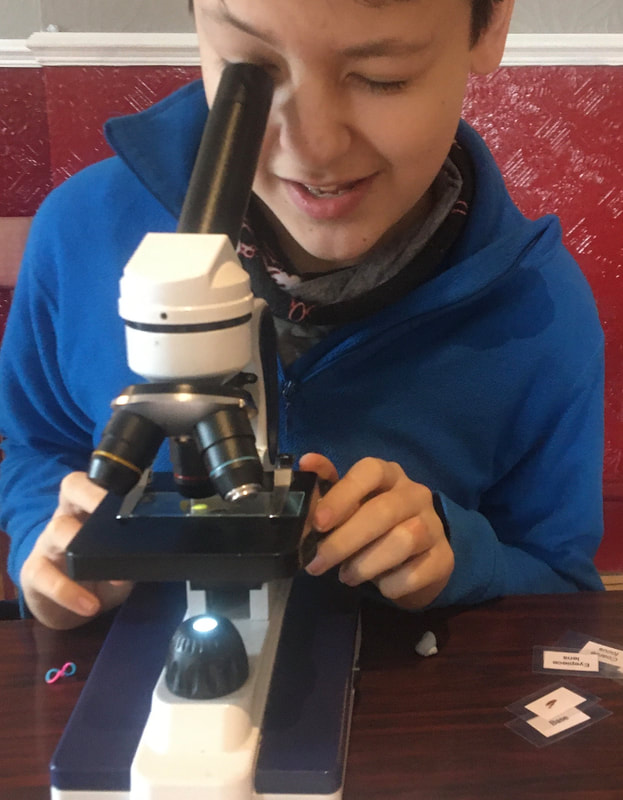
Each student will have their own microscope to use for the duration of the session. They will be supported to identify the parts of a microscope and to learn to use it effectively to study a range of specimens. They will have opportunities to prepare plant and animal cell slides and to identify the structures in plant and animal cells. They will also have the opportunity to learn techniques for effective drawing of microscopy samples and carry out magnification calculations, whilst developing their knowledge of plant and animal cell structure and function.
All tasks are carefully differentiated to allow students at any stage of their IGCSE journey to access learning at a level that is suitable to them individually.
Included with your booking:
- Small group (max. 10) tuition and guidance from a fully qualified and exam-experienced (PGCE, QTS) science teacher
- All equipment, materials and resources for practical, experimental science and activity-focused tuition.
- Exam questions, mark schemes and model answers to take home
- Room hire, tax, comprehensive public liability insurance
Registration
Upon booking you will receive an automated receipt of your payment by email. You will receive a further email from Sparking STEM within one business day, with confirmation of your booking and a link to complete registration for your student(s). Registration will provide you with the opportunity to notify Sparking STEM of any particular needs your child may have.
Please check your junk / spam folder. If you have not heard received confirmation of your booking within one business day please contact Sparking STEM.
Policies
Please read the following policies carefully. Registrations cannot be processed without agreement to these policies:
By making this booking you are agreeing to the cancellation policy.
Practical Science for 11-16s: Force and extension
Booking will open on Monday 19th August 2024 (marked as "sold out" until then)
Date and time:
Thursday 16th January 2025
10-12am
Details
Links to Edexcel specification: 1.22 practical: "investigate how extension varies with applied force for helical springs, metal wires and rubber bands".
With a range of student-led investigations, students will explore the difference between elastic and inelastic distortion and see how these terms apply in the real world. They will be supported to conduct an investigation into the relationship between force and extension in springs whilst developing some of the experimental skills that are assessed in IGCSE examinations. They will have the opportunities to learn about Hooke's Law, proportionality, graphical representation of data and the elastic limit and will and receive guidance regarding exam technique and understanding of key words and terminology.
All tasks are carefully differentiated to allow students at any stage of their IGCSE journey to access learning at a level that is suitable to them individually.
Included with your booking:
- Small group (max. 10) tuition and guidance from a fully qualified and exam-experienced (PGCE, QTS) science teacher
- All equipment, materials and resources for practical, experimental science and activity-focused tuition.
- Exam questions, mark schemes and model answers to take home
- Room hire, tax, comprehensive public liability insurance
Registration
Upon booking you will receive an automated receipt of your payment by email. You will receive a further email from Sparking STEM within one business day, with confirmation of your booking and a link to complete registration for your student(s). Registration will provide you with the opportunity to notify Sparking STEM of any particular needs your child may have.
Please check your junk / spam folder. If you have not heard received confirmation of your booking within one business day please contact Sparking STEM.
Policies
Please read the following policies carefully. Registrations cannot be processed without agreement to these policies:
By making this booking you are agreeing to the cancellation policy.
Practical Science for 11-16s: Refraction and dispersion of light
Booking will open on Monday 19th August 2024 (marked as "sold out" until then)
Date and time:
Monday 20th January 2025
10-12am
Details
Links to the Edexcel specification practical 3.19: "investigate the refractive index of glass, using a glass block".
Students will be supported to carry out a range of student-led explorations and investigations to explore refraction and dispersion of light. They will be supported to develop the experimental skills that are assessed in IGCSE examinations. They will have opportunities to further their knowledge and understanding of ray diagrams, the refractive index, total internal reflection and the law of refraction, and to develop exam technique and understanding of key words and terminology.
All tasks are carefully differentiated to allow students at any stage of their IGCSE journey to access learning at a level that is suitable to them individually.
Registration
Upon booking you will receive an automated receipt of your payment by email. You will receive a further email from Sparking STEM within one business day, with confirmation of your booking and a link to complete registration for your student(s). Registration will provide you with the opportunity to notify Sparking STEM of any particular needs your child may have.
Please check your junk / spam folder. If you have not heard received confirmation of your booking within one business day please contact Sparking STEM.
Included with your booking:
- Small group (max. 10) tuition and guidance from a fully qualified and exam-experienced (PGCE, QTS) science teacher
- All equipment, materials and resources for practical, experimental science and activity-focused tuition.
- Exam questions, mark schemes and model answers to take home
- Room hire, tax, comprehensive public liability insurance
Policies
Please read the following policies carefully registrations cannot be processed without agreement to these policies:
By making this booking you are agreeing to the cancellation policy.
Practical Science for 11-16s: Chemical tests for nutrients
Booking will open on Monday 19th August 2024 (marked as "sold out" until then)
Date and time:
Thursday 23rd January 2025
10-12am
Details
Links to Edexcel specification 2.9 practical: investigate food samples for the presence of glucose, starch, protein and fat.
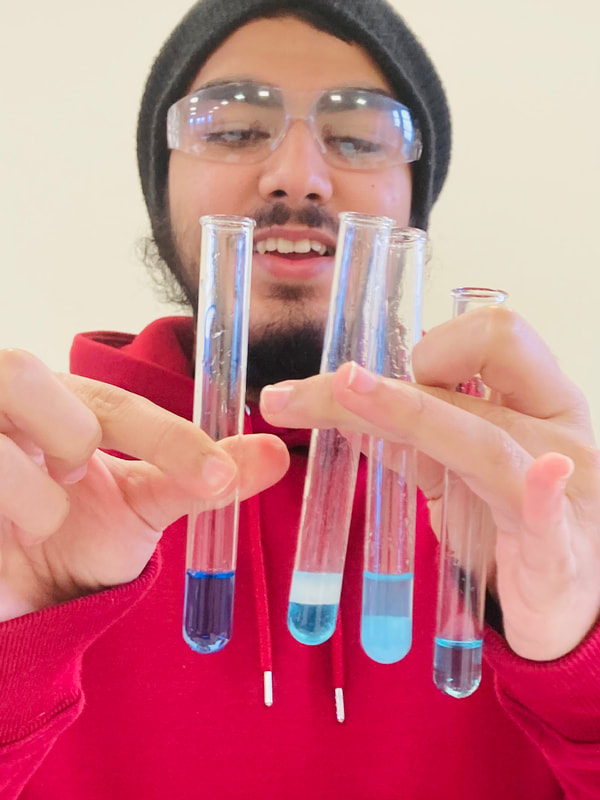
Students will be supported to identify unknown substances using a range of chemical reagents and then to apply they knowledge to identify nutrients in real foods. They will be supported to develop the experimental skills that are assessed in IGCSE examinations. They will have opportunities to further their knowledge and understanding of the structure and digestion of carbohydrates, proteins, fats and sugars and to develop exam technique and understanding of key words and terminology.
All tasks are carefully differentiated to allow students at any stage of their IGCSE journey to access learning at a level that is suitable to them individually.
Included with your booking:
- Small group (max. 10) tuition and guidance from a fully qualified and exam-experienced (PGCE, QTS) science teacher
- All equipment, materials and resources for practical, experimental science and activity-focused tuition.
- Exam questions, mark schemes and model answers to take home
- Room hire, tax, comprehensive public liability insurance
Registration
Upon booking you will receive an automated receipt of your payment by email. You will receive a further email from Sparking STEM within one business day, with confirmation of your booking and a link to complete registration for your student(s). Registration will provide you with the opportunity to notify Sparking STEM of any particular needs your child may have.
Please check your junk / spam folder. If you have not heard received confirmation of your booking within one business day please contact Sparking STEM.
Policies
Please read the following policies carefully registrations cannot be processed without agreement to these policies:
By making this booking you are agreeing to the cancellation policy.
Practical Science for 11-16s: Aerobic respiration
Booking will open on Monday 19th August 2024 (marked as "sold out" until then)
Date and time:
Monday 27th January 2025
10-12am
Details
Links to Edexcel specification 2.39 practical: "investigate the evolution of carbon dioxide and heat from respiring seeds or other suitable living organisms".
Students will be supported to carry out an investigation to compare the rate of aerobic respiration and evolution of carbon dioxide from a range of subjects. They will also have the opportunity to explore demonstrations of a range of methods that can be used to measure respiration and heat release in living organisms. Students will be supported to develop the experimental skills that are assessed in IGCSE examinations and to consider the limitations of a range of methodologies. They will have opportunities to further their knowledge and understanding of aerobic respiration as a chemical reaction in cells and the respiration equation, and to develop exam technique and understanding of key words and terminology.
Please note that this practical may involve the use of live maggots, which will be ethically and sensitively handled.
All tasks are carefully differentiated to allow students at any stage of their IGCSE journey to access learning at a level that is suitable to them individually.
Included with your booking:
- Small group (max. 10) tuition and guidance from a fully qualified and exam-experienced (PGCE, QTS) science teacher
- All equipment, materials and resources for practical, experimental science and activity-focused tuition.
- Exam questions, mark schemes and model answers to take home
- Room hire, tax, comprehensive public liability insurance
Registration
Upon booking you will receive an automated receipt of your payment by email. You will receive a further email from Sparking STEM within one business day, with confirmation of your booking and a link to complete registration for your student(s). Registration will provide you with the opportunity to notify Sparking STEM of any particular needs your child may have.
Please check your junk / spam folder. If you have not heard received confirmation of your booking within one business day please contact Sparking STEM.
Policies
Please read the following policies carefully registrations cannot be processed without agreement to these policies:
By making this booking you are agreeing to the cancellation policy.
Practical Science for 11-16s: Heart biology and dissection
Booking will open on Monday 19th August 2024 (marked as "sold out" until then)
Date and time:
Thursday 30th January 2025
10-12am
Details
Students will be supported to investigate the structure and function of the heart and circulatory system and to carry out a dissection on real hearts (lamb). Each student has their own lamb's heart to dissect, if they wish. They will be guided to develop exam technique and understanding of key words and terminology.
Please note that this practical uses real lamb organs. Halaal organs may be supplied upon request. Please add a note to your booking or send an email when you book.
Minimum participant numbers: Please note that this session has a minimum participant number policy and could be cancelled if there are too few participants. Should this happen you would, of course, be refunded in full.
Included with your booking:
- Small group (max. 10) tuition and guidance from a fully qualified and exam-experienced (PGCE, QTS) science teacher
- All equipment, materials and resources for practical, experimental science and activity-focused tuition.
- Exam questions, mark schemes and model answers to take home
- Room hire, tax, comprehensive public liability insurance
Registration
Upon booking you will receive an automated receipt of your payment by email. You will receive a further email from Sparking STEM within one business day, with confirmation of your booking and a link to complete registration for your student(s). Registration will provide you with the opportunity to notify Sparking STEM of any particular needs your child may have.
Please check your junk / spam folder. If you have not heard received confirmation of your booking within one business day please contact Sparking STEM.
Policies
Please read the following policies carefully registrations cannot be processed without agreement to these policies:
By making this booking you are agreeing to the cancellation policy.
Practical Science for 11-16s: Measuring and calculating density
Booking will open on Monday 19th August 2024 (marked as "sold out" until then)
Date and time:
Monday 3rd February 2025
10-12am
Details
Links to Edexcel specification 5.4: practical: investigate density using direct measurements of mass and volume".
Students will be supported to use and evaluate techniques to measure and calculate the density of regular and irregular objects. They will be supported to develop the experimental skills that are assessed in IGCSE examinations and to accurately collect data and analyse their results. They will have opportunities to further their knowledge and understanding of mass, volume, density and units of measurement, and to develop exam technique and understanding of key words and terminology.
All tasks are carefully differentiated to allow students at any stage of their IGCSE journey to access learning at a level that is suitable to them individually.
Included with your booking:
- Small group (max. 10) tuition and guidance from a fully qualified and exam-experienced (PGCE, QTS) science teacher
- All equipment, materials and resources for practical, experimental science and activity-focused tuition.
- Exam questions, mark schemes and model answers to take home
- Room hire, tax, comprehensive public liability insurance
Registration
Upon booking you will receive an automated receipt of your payment by email. You will receive a further email from Sparking STEM within one business day, with confirmation of your booking and a link to complete registration for your student(s). Registration will provide you with the opportunity to notify Sparking STEM of any particular needs your child may have.
Please check your junk / spam folder. If you have not heard received confirmation of your booking within one business day please contact Sparking STEM.
Policies
Please read the following policies carefully registrations cannot be processed without agreement to these policies:
By making this booking you are agreeing to the cancellation policy.
Practical Science for 11-16s: Water movement through cells - Osmosis
Booking will open on Monday 19th August 2024 (marked as "sold out" until then)
Date and time:
Thursday 6th February 2025
10-12am
Details
Links to Edexcel specification 2.17 practical: "investigate osmosis using living and non-living systems"
Students will be supported to carry out an investigation to explore the movement of water in and out of cells by the process of osmosis, and to understand the effects of osmosis on plant tissues. Students will be supported to develop the experimental skills that are assessed in IGCSE examinations. They will have opportunities to further their knowledge and understanding of cell transport and the role of osmosis in animal and plant tissues, and to develop exam technique and understanding of key words and terminology.
All tasks are carefully differentiated to allow students at any stage of their IGCSE journey to access learning at a level that is suitable to them individually.
Included with your booking:
- Small group (max. 10) tuition and guidance from a fully qualified and exam-experienced (PGCE, QTS) science teacher
- All equipment, materials and resources for practical, experimental science and activity-focused tuition.
- Exam questions, mark schemes and model answers to take home
- Room hire, tax, comprehensive public liability insurance
Registration
Upon booking you will receive an automated receipt of your payment by email. You will receive a further email from Sparking STEM within one business day, with confirmation of your booking and a link to complete registration for your student(s). Registration will provide you with the opportunity to notify Sparking STEM of any particular needs your child may have.
Please check your junk / spam folder. If you have not heard received confirmation of your booking within one business day please contact Sparking STEM.
Policies
Please read the following policies carefully registrations cannot be processed without agreement to these policies:
By making this booking you are agreeing to the cancellation policy.
Practical Science for 11-16s: Lung biology and dissection
Booking will open on Monday 19th August 2024 (marked as "sold out" until then)
Date and time:
Monday 10th February 2025
10-12am
Details
Links to the Edexcel specification 2.50 practical: "investigate breathing in humans, including the release of carbon dioxide"
Students will be supported to investigate the mechanics of breathing and to carry out a dissection on real lungs (lamb). Each student has their own set of lungs to dissect, if they wish. They will have opportunities to further their knowledge and understanding of lung biology, gas exchange and the role of muscular and skeletal system in the mechanics of breathing. They will be guided to develop exam technique and understanding of key words and terminology.
All tasks are carefully differentiated to allow students at any stage of their IGCSE journey to access learning at a level that is suitable to them individually.
Please note that this practical uses real lamb organs. Halaal organs may be supplied upon request. Please add a note to your booking or send an email when you book.
Minimum participant numbers: Please note that this session has a minimum participant number policy and could be cancelled if there are too few participants. Should this happen you would, of course, be refunded in full.
Included with your booking:
- Small group (max. 10) tuition and guidance from a fully qualified and exam-experienced (PGCE, QTS) science teacher
- All equipment, materials and resources for practical, experimental science and activity-focused tuition.
- Exam questions, mark schemes and model answers to take home
- Room hire, tax, comprehensive public liability insurance
Registration
Upon booking you will receive an automated receipt of your payment by email. You will receive a further email from Sparking STEM within 24 hours with confirmation of your booking and a link to complete registration for your student(s). Registration will provide you with the opportunity to notify Sparking STEM of any particular needs your child may have.
Please check your junk / spam folder. If you have not heard received confirmation of your booking within 24 hours and contact Sparking STEM.
Policies
Please read the following policies carefully registrations cannot be processed without agreement to these policies:
By making this booking you are agreeing to the cancellation policy.
Practical Science for 11-16s: Photosynthesis
Booking will open on Monday 19th August 2024 (marked as "sold out" until then)
Date and time:
Thursday 13th February 2025
10-12am
Location: Wesley Hall, Crookes, Sheffield.
Details
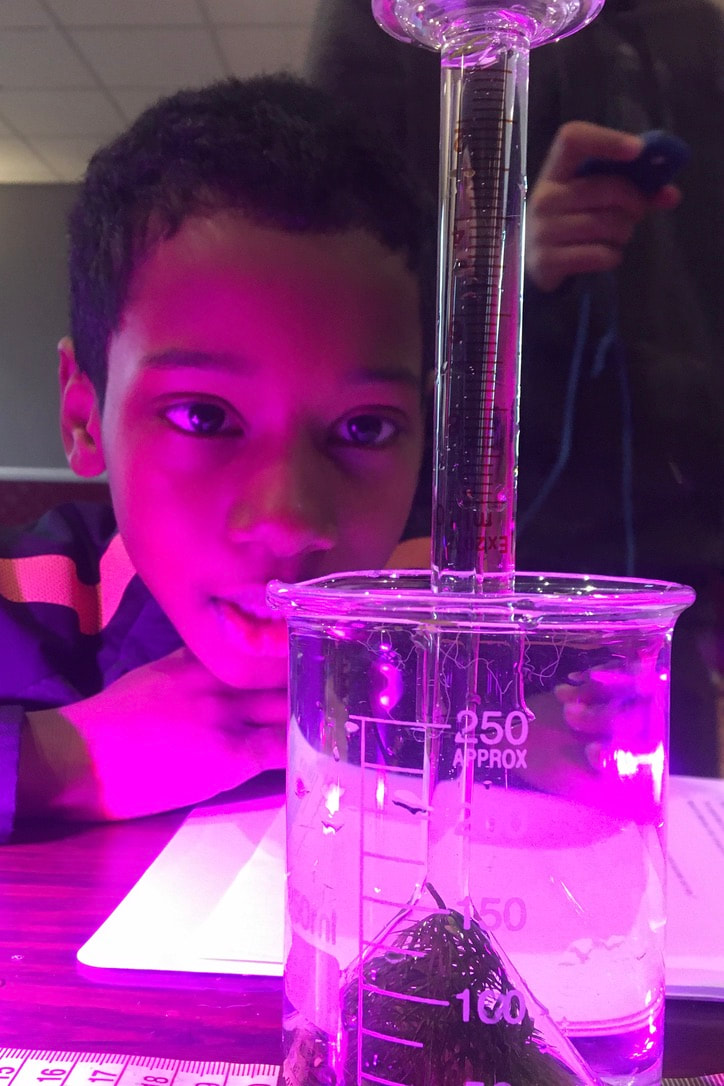
Links to Edexcel specification 2.23 practical: "investigate photosynthesis, showing the evolution of oxygen from a water plant and the requirements of light".
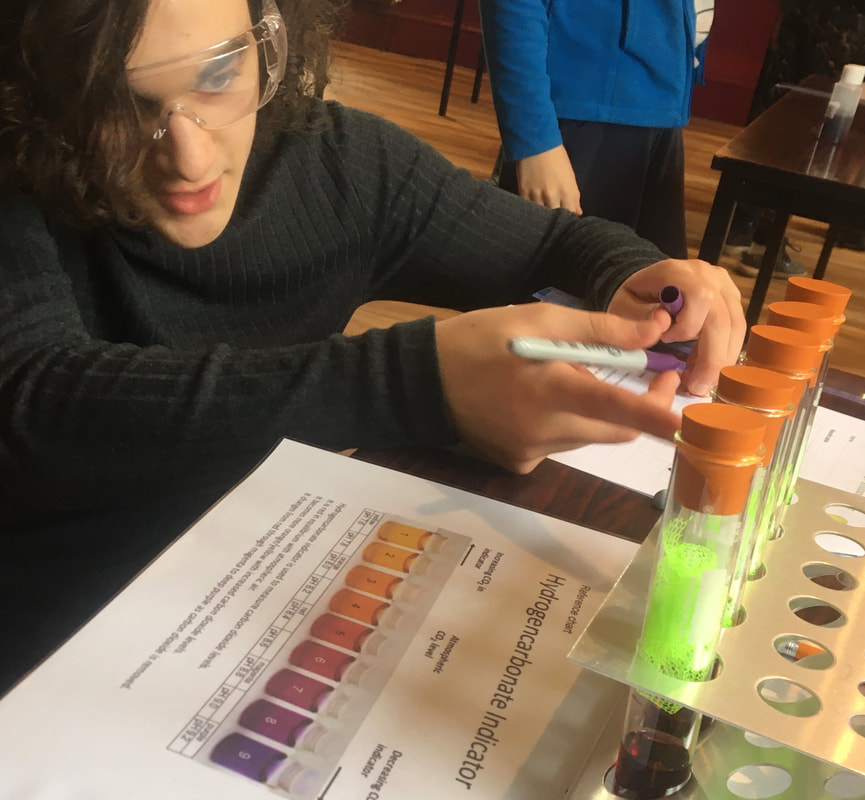
Students will be supported to evaluate and compare two methods for investigating the rate of photosynthesis at different light intensities: the evolution of oxygen from a water plant, and the use of algal balls and bicarbonate indicator to investigate the absorption of carbon dioxide. They will also have opportunities to learn about stomata and as exchange and to investigate how wavelengths of light affect the rate of photosynthesis. They will be supported to develop the experimental skills that are assessed in IGCSE examinations as well as data collection and graphical representation of data. They will have opportunities to further their knowledge and understanding of photosynthesis, plant biology and the photosynthesis equation, and to develop exam technique and understanding of key words and terminology.
All tasks are carefully differentiated to allow students at any stage of their IGCSE journey to access learning at a level that is suitable to them individually.
Included with your booking:
- Small group (max. 10) tuition and guidance from a fully qualified and exam-experienced (PGCE, QTS) science teacher
- All equipment, materials and resources for practical, experimental science and activity-focused tuition.
- Exam questions, mark schemes and model answers to take home
- Room hire, tax, comprehensive public liability insurance
Registration
Upon booking you will receive an automated receipt of your payment by email. You will receive a further email from Sparking STEM within one business day, with confirmation of your booking and a link to complete registration for your student(s). Registration will provide you with the opportunity to notify Sparking STEM of any particular needs your child may have.
Please check your junk / spam folder. If you have not heard received confirmation of your booking within one business day please contact Sparking STEM.
Policies
Please read the following policies carefully registrations cannot be processed without agreement to these policies:
By making this booking you are agreeing to the cancellation policy.
Credentials
✅ Qualified Teacher Status (QTS: PGCE Science)
✅ Postgraduate level Science: MSc.
✅ Certified in "Autism Awareness in Education"
✅ Certified in "Working with children with disabilities and learning difficulties"
✅ Science Education Provider of the Year (Yorkshire Prestige Award winner 22/23)
✅ Enhanced DBS
✅ Safeguarding certified (Level 3 DSL)
✅ Paediatric first aid qualification (OFQAL certified Level 3)
✅ Over twelve years' experience teaching at exam level
✅ Experienced at teaching IGCSE (Edexcel and Cambridge), AQA & Edexcel.
✅ Over seven years' experience working closely with the home-educating community.
✅ Diverse experience teaching children with Special Educational Needs
✅ Nine years of experience working in biological research
✅ Comprehensive public liability insurance
✅ Qualified Teacher Status (QTS: PGCE Science)
✅ Postgraduate level Science: MSc.
✅ Certified in "Autism Awareness in Education"
✅ Certified in "Working with children with disabilities and learning difficulties"
✅ Science Education Provider of the Year (Yorkshire Prestige Award winner 22/23)
✅ Enhanced DBS
✅ Safeguarding certified (Level 3 DSL)
✅ Paediatric first aid qualification (OFQAL certified Level 3)
✅ Over twelve years' experience teaching at exam level
✅ Experienced at teaching IGCSE (Edexcel and Cambridge), AQA & Edexcel.
✅ Over seven years' experience working closely with the home-educating community.
✅ Diverse experience teaching children with Special Educational Needs
✅ Nine years of experience working in biological research
✅ Comprehensive public liability insurance